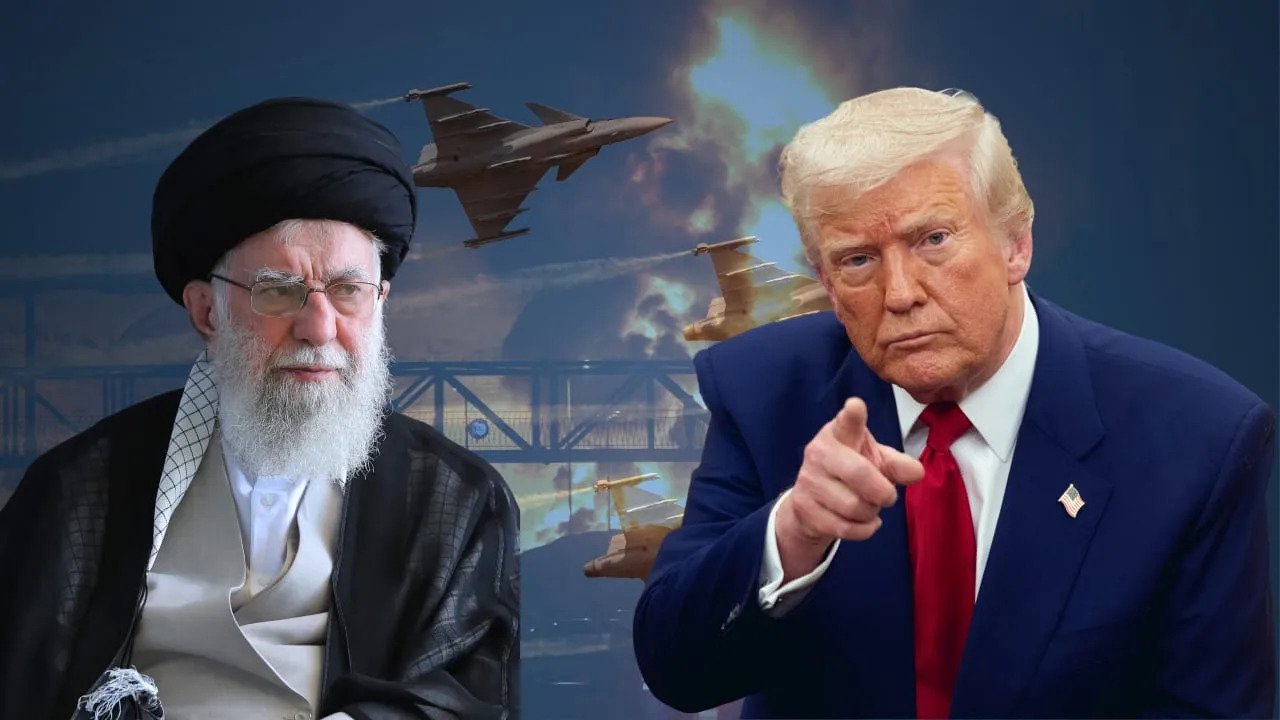
Washington/New York – U.S. President Donald Trump’s renewed stance on Iran has once again captured global attention, driving both market volatility and geopolitical concerns. Investors, already navigating uncertainties related to the Federal Reserve’s upcoming policy decisions, are now closely watching developments in the Middle East and their potential impact on energy markets, commodities, and the broader economy.
Yesterday, Trump reiterated his call for international support to reopen the Strait of Hormuz, a strategic waterway through which approximately 20% of the world’s crude oil passes. However, several U.S. allies declined to provide assistance, raising questions about the potential for supply disruptions and highlighting the complexities of coordinating a multinational response.
Iran has warned that any vessels attempting to transit the Strait could face attacks, a declaration that has significantly reduced tanker traffic in the region. Compounding these tensions, Israeli airstrikes reportedly killed Iran’s top security chief, Ali Larijani, overnight, escalating fears of a broader regional conflict. Analysts note that such developments are likely to keep oil prices elevated, with ripple effects on inflation, consumer costs, and global financial markets.
Markets React to Geopolitical Risk
Despite these uncertainties, U.S. stock indexes closed slightly higher yesterday. The tech-heavy Nasdaq rose 0.5%, the S&P 500 gained 0.3%, and the Dow Jones Industrial Average edged up 0.1%. Investors appeared to balance caution over the geopolitical environment with optimism driven by strong corporate earnings and continued growth in technology sectors, particularly artificial intelligence (AI).
Oil prices have remained extremely sensitive to developments in the region. West Texas Intermediate (WTI) crude futures climbed 2.7% to nearly $96 per barrel, while Brent crude, the international benchmark, closed near $103.50. The surge reflects growing concern that any extended disruption at the Strait of Hormuz could significantly impact global oil supply.
Energy analysts emphasize that global markets are particularly vulnerable due to the combination of tight inventories, heightened demand, and logistical constraints in transporting oil. Even minor escalations in the region could trigger sharp price movements, affecting everything from gasoline costs to industrial production.
The Federal Reserve and Interest Rate Outlook
At the same time, the U.S. Federal Reserve is conducting a two-day policy meeting, and the central bank is widely expected to keep interest rates unchanged this week. Economists suggest that the Fed is likely to adopt a “wait-and-see” approach, monitoring the potential economic impact of rising oil prices and Middle East tensions.
Ali Hassan, a portfolio manager at Thornburg Investment Management, noted, “If the Iran conflict is contained within a few weeks, there may be two to three rate cuts later this year. But if tensions persist for several months, the Fed will likely remain on hold, as energy prices are the primary concern.”
Bond markets reacted cautiously to these developments. The yield on the 10-year U.S. Treasury note, a key benchmark for consumer loan rates, slipped slightly to 4.20% from Monday’s close above 4.22%. This modest decline reflects investor uncertainty and a preference for safer assets amid rising geopolitical risk.
Commodities and Digital Assets
Safe-haven assets saw varied performance. Gold futures ticked higher, surpassing $5,000 per ounce, while silver fell 1.7% to $79.25 per ounce. The U.S. Dollar Index, which measures the dollar against a basket of major currencies, dropped slightly to 99.58. Meanwhile, Bitcoin recovered from overnight lows, trading around $74,600.
Analysts suggest that investors are increasingly using gold and digital assets like Bitcoin as hedges against inflation and geopolitical risk. However, volatility remains high, as market sentiment shifts rapidly in response to news from the Middle East.
Tech Sector Remains in Focus
Even amid geopolitical and energy market concerns, technology stocks continued to attract attention. Nvidia (NVDA), a leader in AI and data center hardware, drew investor focus during its ongoing GPU Technology Conference. CEO Jensen Huang projected that sales of Nvidia’s Vera Rubin and Blackwell AI systems could exceed $1 trillion over the next two years—double the previous forecast of $500 billion for 2025-2026.
“This is a data center boom like no other,” Huang said, noting that demand for Nvidia’s hardware and software solutions remains “off the charts.” The announcement reaffirmed AI’s central role in driving tech sector growth and reinforced optimism in the broader market despite geopolitical uncertainty.
Nvidia also announced several new autonomous vehicle collaborations, including an expanded partnership with Uber Technologies, sending Uber shares up more than 4%. This indicates that AI-driven technology is becoming increasingly embedded in multiple industries, from transportation to cloud computing.
Airlines and Corporate Resilience
The airline sector showed notable resilience. Delta Air Lines (DAL) shares surged 6.5% after the company raised its revenue outlook while maintaining its profit forecast, despite soaring jet fuel prices. Shares of American Airlines (AAL) and United Airlines (UAL) rose more than 3% each, demonstrating investor confidence in the sector’s ability to navigate rising energy costs.
Industry analysts note that airline performance reflects broader trends in corporate earnings and operational efficiency, even in the face of geopolitical uncertainty. Companies that maintain strong revenue streams and cost management are attracting investor interest, helping to offset some of the risk perceived in energy and geopolitical markets.
Global Implications
The combination of Trump’s Iran policy, escalating tensions in the Middle East, and continued uncertainty in energy markets is creating a complex environment for global investors. Analysts emphasize that these developments will not only affect oil prices but may also have broader implications for inflation, monetary policy, and cross-border trade.
Economists warn that a prolonged conflict could slow global economic growth, strain financial markets, and lead to higher borrowing costs. Conversely, a rapid de-escalation could stabilize oil prices, reduce uncertainty, and potentially pave the way for interest rate cuts later in the year.
Investor Outlook
For now, market participants appear cautiously optimistic. Strong corporate earnings, particularly in technology and AI, are supporting equity markets, while safe-haven assets such as gold and Treasury notes provide stability against geopolitical risk. Investors remain alert to developments in Iran, the Strait of Hormuz, and energy markets, as these factors are likely to dominate headlines and market sentiment in the coming weeks.
In conclusion, Trump’s Iran policy has intensified global attention on the Middle East, creating both risks and opportunities for investors. As energy prices fluctuate and geopolitical uncertainty continues, market participants must balance caution with strategic investment in sectors demonstrating resilience, such as technology and essential services.