Introduction
The recent escalation between Israel, the United States, and Iran has raised serious questions about how the conflict began—and whether expectations were misjudged from the start. Reports suggest that Israeli Prime Minister Benjamin Netanyahu may have presented the idea of a quick and decisive campaign against Iran to former U.S. President Donald Trump.
However, as the war continues with no clear end in sight, it appears that the situation has turned out far more complex than initially described.
Early Talks and Strategic Promises
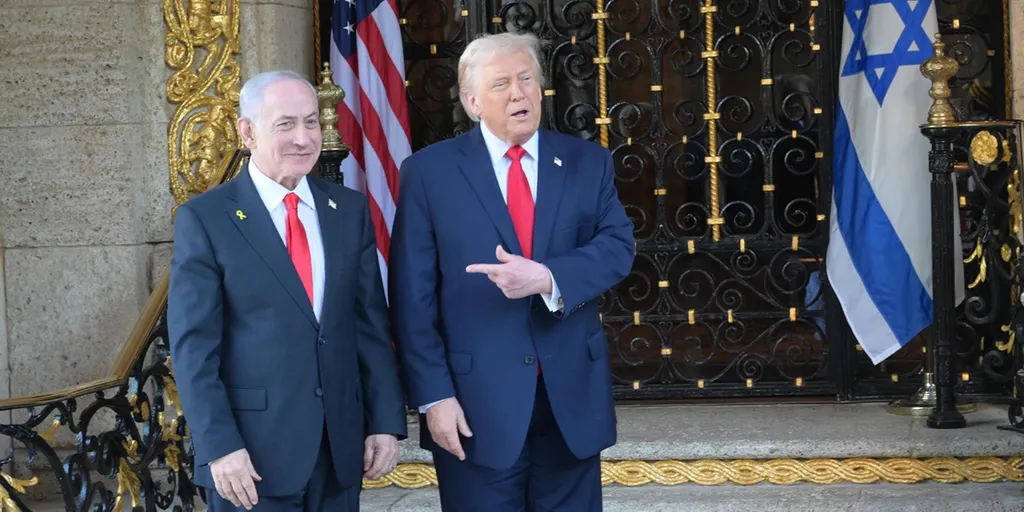
During a meeting at Mar-a-Lago in late 2025, Netanyahu reportedly pushed for renewed military action against Iran. At the time, Israel had already rebuilt much of its defense capability after earlier clashes.
Public statements from Trump echoed a strong stance against Iran, suggesting readiness for further action if necessary. Behind the scenes, however, the pitch may have included bold claims:
A short and manageable military campaign
The possibility of weakening or even toppling Iran’s leadership
Reduced reliance on U.S. military aid for Israel in the future
These promises painted the operation as both achievable and strategically beneficial.
The Idea of a “Quick Victory”
Israeli officials reportedly believed the conflict would be brief. Early expectations included:
Neutralizing Iran’s missile capabilities within days
Ending major hostilities within a few weeks
Achieving significant political change inside Iran
Such projections created confidence that the war would be limited in scope and duration. However, these assumptions have since been challenged by unfolding events.
Reality on the Ground
As the conflict progressed, the situation became far more complicated than expected.
Despite targeted strikes and high-profile losses among Iranian leadership, the anticipated rapid outcomes did not materialize. Instead:
Iran’s internal structure showed signs of resilience
Military responses continued beyond initial expectations
The conflict expanded regionally, involving multiple fronts
This gap between expectations and reality has fueled criticism of the original strategy.
Questions Inside the U.S. Leadership
Within U.S. political circles, there are indications that some officials viewed the initial projections as overly optimistic.
Reports suggest that Vice President JD Vance and others questioned the assumption that regime change in Iran would be straightforward. Some insiders believe the risks were underestimated before the conflict began.
At the same time, analysts argue that Trump was not merely persuaded but was also willing to engage, influenced by broader strategic goals and previous foreign policy decisions.
A Pattern in Regional Conflicts
Critics point out that this situation reflects a broader pattern in recent Middle Eastern conflicts involving Israel.
Across different regions:
Military victories have often been declared quickly
Long-term stability has remained elusive
Opposing groups have continued to operate despite setbacks
This raises concerns about whether short-term military success is being confused with lasting strategic outcomes.
Global Consequences of the Conflict
The ongoing war has had far-reaching effects beyond the Middle East.
Economic Impact
Disruptions in global oil supply routes
Increased pressure on international markets
Military Strain
High financial costs for both the U.S. and its allies
Increased demand on advanced weapon systems
Reduced focus on other global priorities
Geopolitical Shifts
Tensions within alliances such as NATO
Opportunities for rival powers to expand influence
Growing uncertainty in international diplomacy
Diplomatic Fallout for Israel
The long-term consequences for Israel could extend beyond the battlefield.
Some key concerns include:
Strained relationships with Gulf countries
Reduced trust among international partners
Growing criticism from global leaders
For example, Emmanuel Macron has emphasized that military action alone cannot resolve Iran’s nuclear ambitions, highlighting the need for diplomatic solutions.
Changing Public Opinion
Public sentiment, particularly in the United States, appears to be shifting.
Recent surveys indicate:
Declining support for Israel across political groups
Increased sympathy toward Palestinians
Growing skepticism about military involvement abroad
Even within traditionally supportive communities, concerns are rising about the long-term impact of the conflict.
Long-Term Implications
The consequences of this war may reshape international relations in several ways:
Future U.S. military support for Israel could face stricter conditions
Global alliances may shift based on the outcome
The balance of power in the Middle East could change significantly
What began as a proposed “quick” operation now risks becoming a prolonged and costly conflict.
Final Thoughts
The question of whether Donald Trump underestimated the realities of the situation—or was influenced by overly optimistic projections from Benjamin Netanyahu—remains open to debate.
What is clear, however, is that the idea of an “easy war” has not matched reality. As the conflict continues, its consequences are being felt not only in the region but across the world.
In the end, this situation serves as a reminder that modern conflicts are rarely as simple or predictable as they may initially appear.