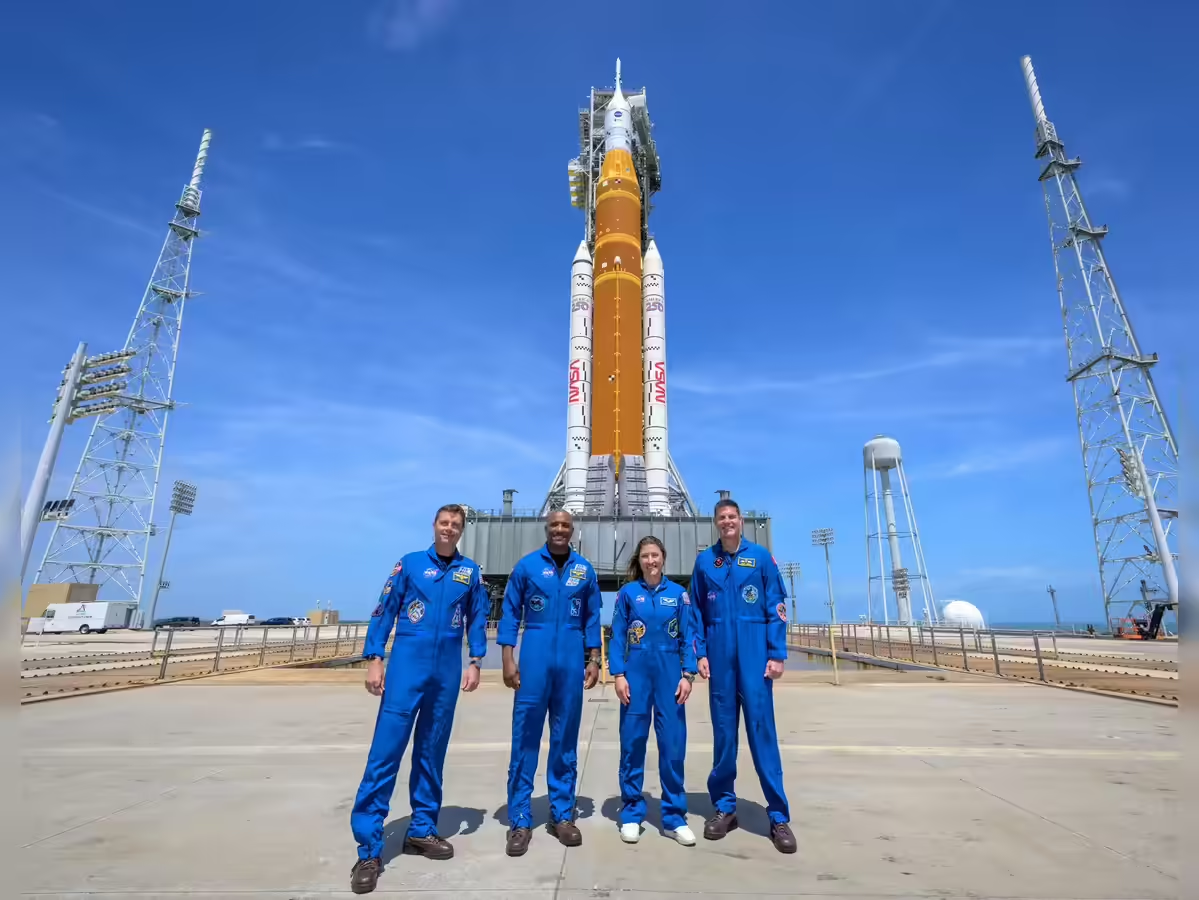
Space missions are often seen as the pinnacle of human innovation — complex, precise, and nearly flawless. However, even in the highly controlled environment of space travel, astronauts can encounter surprisingly familiar issues. During the first day of the Artemis II mission, the crew faced a situation many people experience daily: a problem with email.
This unexpected hiccup serves as a reminder that no matter how advanced the technology, small technical glitches can happen anywhere — even millions of miles away from Earth.
A Promising Start to a Historic Mission
The Artemis II mission began on a strong note, marking a major step forward in modern space exploration. As the first crewed lunar mission in over five decades, it carries significant importance for future deep-space travel.
The spacecraft successfully launched and exited Earth’s atmosphere without any complications. Everything appeared to be running smoothly as the astronauts began their 10-day journey around the Moon. But shortly after settling in, the crew encountered a challenge that felt surprisingly ordinary.
When Email Stops Working in Space
Mission commander Reid Wiseman noticed an issue while trying to access email on his onboard computer. He reported that there were two versions of Microsoft Outlook visible on his system, but neither was functioning correctly.
During a live communication with Mission Control, Wiseman explained the issue and requested assistance. He even suggested that the ground team remotely access his system to investigate the problem further.
For many people working in offices, this situation sounds all too familiar — software glitches, duplicate apps, and email failures are common frustrations. The difference here? This issue occurred in a spacecraft traveling beyond Earth’s orbit.
Remote Tech Support — Even in Space
NASA’s Mission Control team quickly responded to the request. With permission from Wiseman, they remotely connected to his onboard computer to diagnose and fix the issue.
After a short period, the team confirmed that the problem had been resolved. They also informed him that the system might temporarily appear offline, which is normal after remote troubleshooting.
This interaction highlights how advanced and reliable NASA’s support systems are. Even when astronauts are far from Earth, experts on the ground can access onboard systems and resolve technical issues in real time.
The Role of Onboard Computers
The computer system used by the Artemis II crew is known as a Personal Computing Device (PCD). It is essential for managing daily operations during the mission.
Astronauts rely on the PCD to:
Track mission timelines
Access important data
Communicate with Mission Control
Run essential software applications
For this mission, NASA equipped the crew with a Microsoft Surface Pro, a compact yet powerful device suitable for the demanding conditions of space.
Even though the hardware is highly advanced, software issues like the Outlook glitch show that no system is entirely immune to problems.
Another Challenge A Malfunctioning Space Toilet
The email issue wasn’t the only problem the crew encountered. Artemis II mission specialist Christina Koch reported a technical issue with the spacecraft’s toilet system.
Understanding the Universal Waste Management System
The Orion capsule is equipped with a specially designed toilet called the Universal Waste Management System. This system is built to function in microgravity, ensuring that waste is handled safely and hygienically during space missions.
However, during Artemis II, the system experienced a malfunction when its fan became jammed. The fan plays a critical role in airflow and proper operation, so any issue with it needs immediate attention.
How NASA Handles Equipment Failures
Once the issue was reported, NASA’s ground team began working on a solution. Engineers quickly developed a set of instructions to help the crew access the affected area and fix the problem.
This situation demonstrates how astronauts and ground teams work together to solve problems efficiently. While astronauts are trained to handle many technical issues, they rely heavily on experts back on Earth for guidance and support.
Maintaining systems like the toilet may not sound glamorous, but it is essential for the comfort, health, and overall success of the mission.
Pre-Launch Concerns and Safety Measures
Even before the spacecraft left Earth, the mission experienced a brief delay. NASA temporarily issued a “no-go” status while investigating a potential issue with the flight termination system.
What Is the Flight Termination System?
The flight termination system is a critical safety feature designed to protect people on the ground. In case of a serious malfunction during launch, this system can disable the rocket to prevent it from causing harm.
After carefully reviewing the issue and confirming that everything was functioning properly, NASA cleared the mission for launch. The spacecraft then proceeded successfully, beginning its journey as planned.
The Bigger Picture Why Artemis II Matters
Artemis II is more than just another space mission — it represents a major milestone in human exploration. It is the first time astronauts are traveling around the Moon since the Apollo era.
The mission’s primary goals include:
Testing spacecraft systems in deep space
Evaluating crew performance in a lunar environment
Ensuring safety for future missions
Preparing for upcoming lunar landings
By successfully completing these objectives, Artemis II will pave the way for more ambitious missions, including returning humans to the Moon and eventually sending astronauts to Mars.
The Importance of the Orion Spacecraft
At the heart of the Artemis II mission is the Orion capsule, a next-generation spacecraft designed for deep-space travel.
Orion is equipped with advanced technology, including:
Life support systems for extended missions
Navigation and communication tools
Radiation protection
Waste management systems
The mission provides a real-world test of these systems, ensuring they can perform reliably under the challenging conditions of space.
Everyday Problems in Extraordinary Places
One of the most interesting aspects of the Artemis II mission is how it highlights the human side of space travel. Despite being highly trained professionals operating cutting-edge technology, astronauts still encounter everyday problems.
From email issues to hardware malfunctions, these situations remind us that space missions are not immune to the same challenges people face on Earth.
How Astronauts Are Trained for the Unexpected
Astronauts undergo extensive training to prepare for a wide range of scenarios. This includes:
Technical troubleshooting
Emergency procedures
Equipment repair
Communication protocols
This training ensures that they can remain calm and effective, even when unexpected issues arise.
However, they are never alone. NASA’s Mission Control team is always available to provide support, guidance, and solutions.
The Role of Teamwork in Space Exploration
The Artemis II mission highlights the importance of teamwork. Every successful space mission depends on close coordination between astronauts and ground teams.
Mission Control continuously monitors spacecraft systems, analyzes data, and provides real-time assistance. This collaboration allows problems to be resolved quickly and efficiently.
Even something as simple as fixing an email application becomes a coordinated effort involving multiple experts.
Technology Isn’t Perfect — And That’s Okay
The challenges faced during Artemis II demonstrate an important reality: no technology is perfect. Even the most advanced systems can experience glitches or failures.
What matters is how these issues are handled. In the case of Artemis II, the crew and ground team worked together seamlessly to resolve problems without impacting the mission’s overall progress.
This ability to adapt and respond is what makes modern space exploration so successful.
Looking Ahead The Future of Space Missions
Artemis II is just one step in a larger plan to expand human presence in space. Future missions will build on the knowledge gained from this journey.
These missions aim to:
Establish a long-term human presence on the Moon
Develop new technologies for deep-space travel
Prepare for human exploration of Mars
Each challenge faced and solved during Artemis II contributes to this broader vision.
Final Thoughts
The Artemis II mission is a powerful reminder that even in the most advanced and extraordinary environments, simple problems can still occur. Whether it’s a malfunctioning email app or a technical issue with onboard equipment, these moments highlight the human side of space exploration.
At the same time, they demonstrate the strength of preparation, teamwork, and innovation. With skilled astronauts and dedicated support teams working together, even unexpected challenges can be overcome.
In the end, Artemis II is not just about reaching the Moon — it’s about proving that humans can adapt, solve problems, and thrive in the most challenging environments imaginable.